the olive oil
extra virgin | cold extracted | organic
This oil starts with 1,500 trees that were already old when the last sharecroppers left them. It is picked by hand and pressed within seven hours.
buy the 2026 harvest ↓- harvested:
- october 2026
- cultivars:
- frantoio, leccino, moraiolo
- origin:
- product of italy
- single estate:
- soiano, montaione
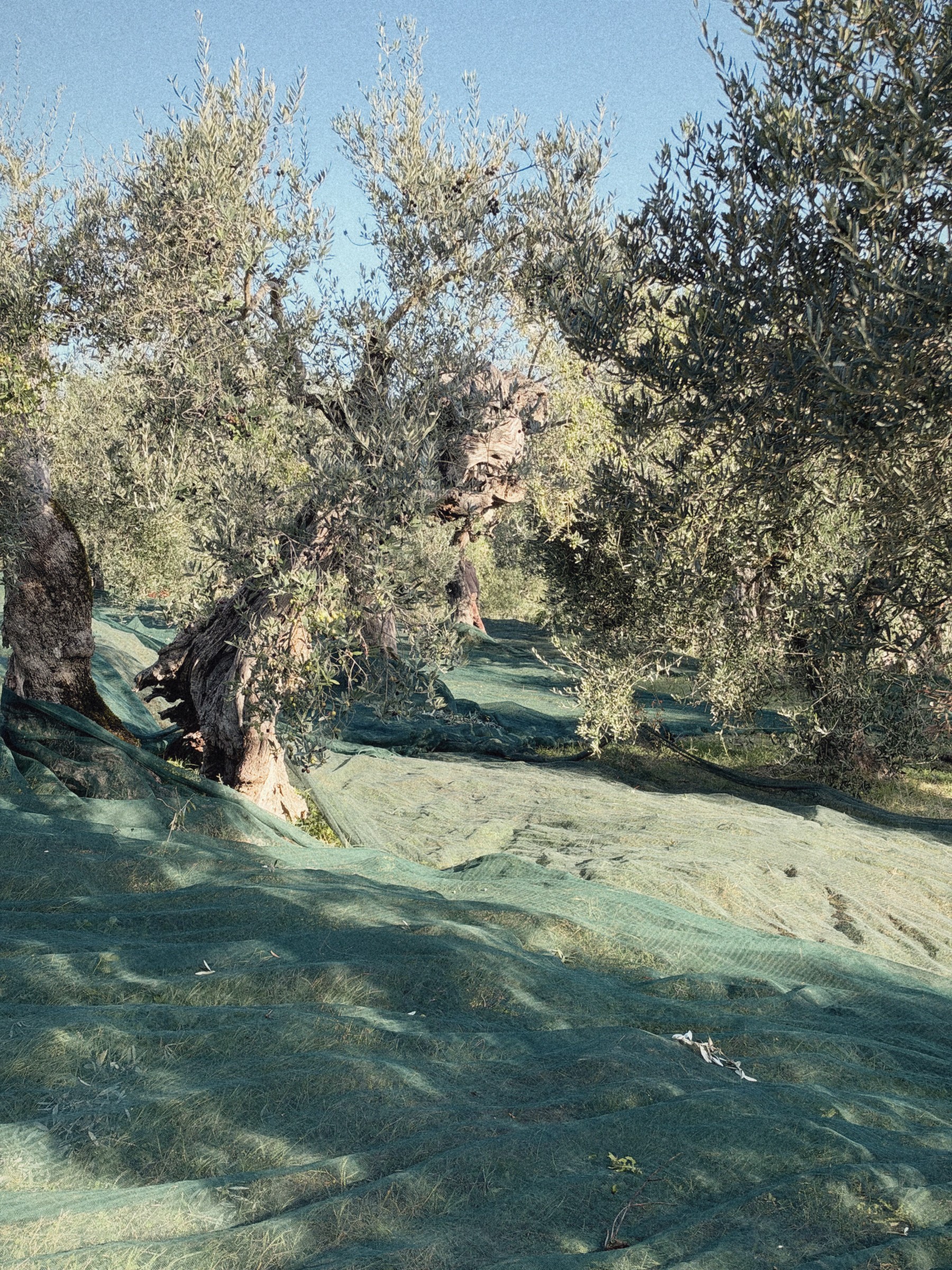
the trees
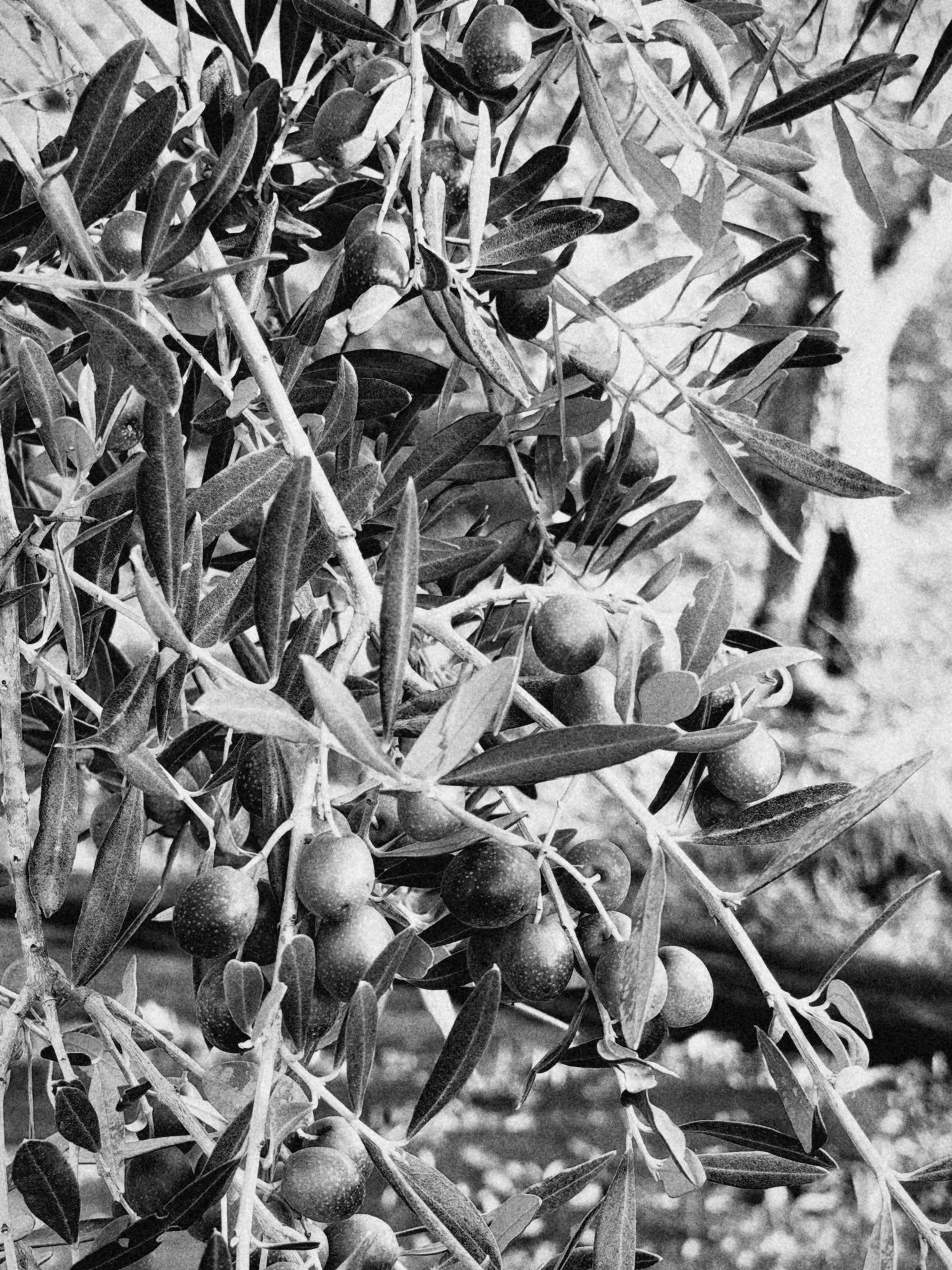
Frantoio, Leccino and Moraiolo, on the first land of Italy.
They grow just below the hill at Iano, which local histories record as the first land in Italy to rise from the sea, on stony, free-draining ground. The trunks are knotted and gaunt, and every year they bear again. These are the old Tuscan varieties, farmed organically and certified by Suolo e Salute.
The groves are in the care of Tommaso Trinci, our agronomist and olive oil expert.
the harvest
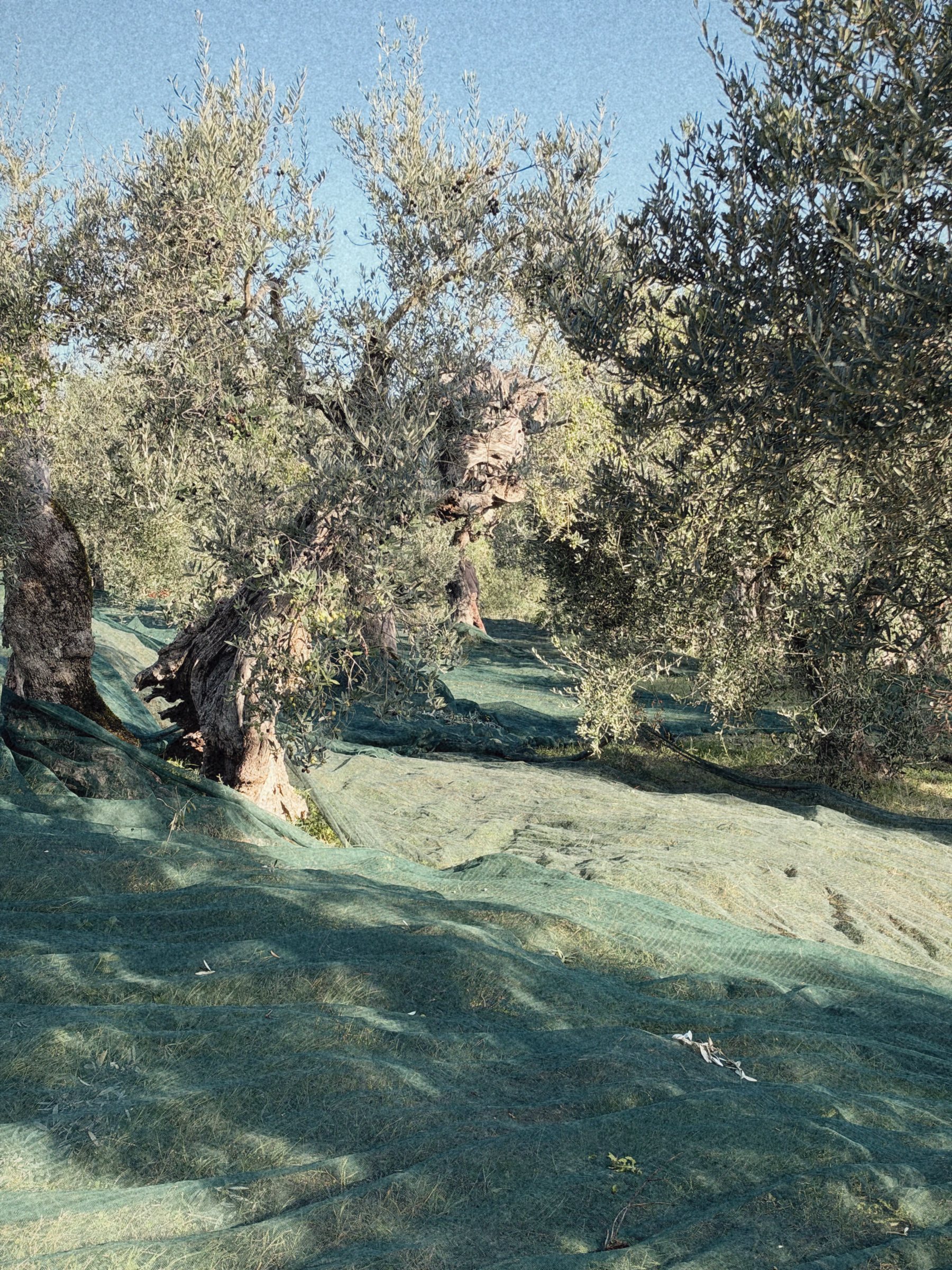
Every olive comes down by hand.
The pruning and the harvest belong to our squadra, the estate crew, led by Fatmir Krasniqi. Nets go down under the trees, the fruit comes off the branch, and the crates fill up in the grass.
seven hours
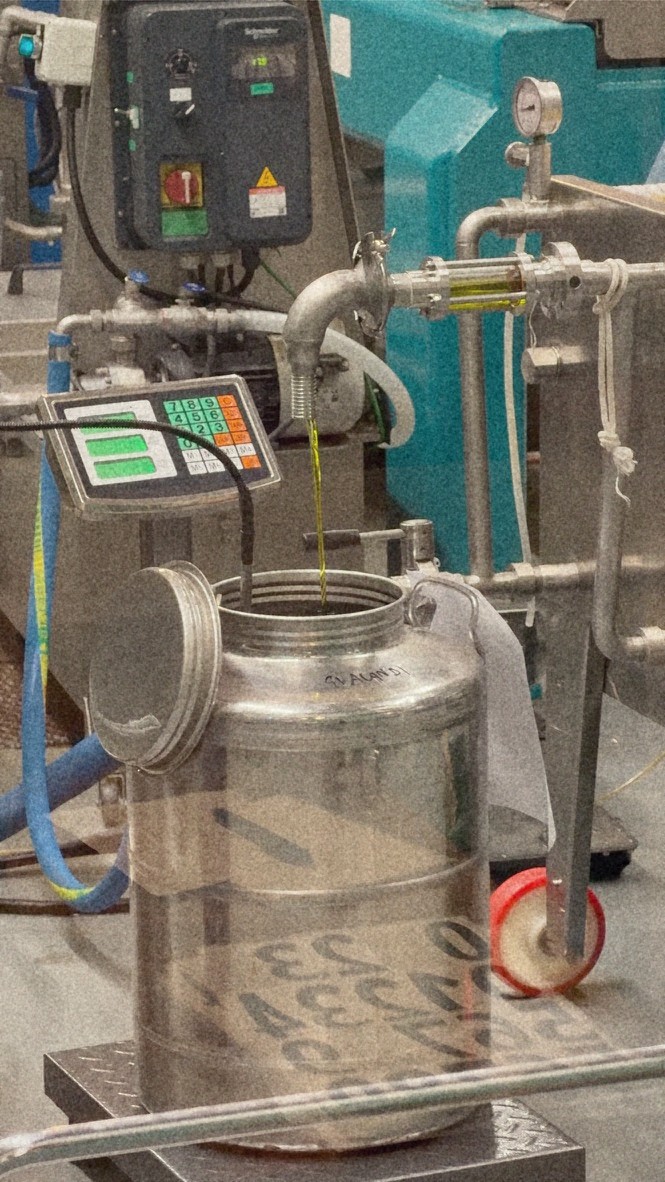
An olive starts to age the moment it leaves the tree.
So everything here is built around the clock. Through the harvest, two trucks leave Soiano every day, one at midday and one at five, bound for Frantoio del Grevepesa in Chianti, one of the most respected mills in Tuscany. The drive takes an hour, with the olives shaded and ventilated all the way.
They are pressed cold, below 27°C (81°F), within seven hours of leaving the tree. Nothing is added.
three groves
Same hands, same hours, three different suns.
Alba faces east and takes the first light of the morning. Sesta faces south, in full sun through the middle of the day. Vespro faces west, warmed by the last of the afternoon. That is enough to give three distinct oils, and they are only sold together.
the numbers
An accredited laboratory tested the new oil in October. Here is what it found, and what each number means for the oil.
- harvest:
- by hand, in october
- pressing:
- within 7 hours of picking
- extraction:
- cold, below 27°c (81°f)
- cultivars:
- frantoio, leccino, moraiolo
- polyphenols:
- 496 mg/kg
Natural compounds from the fruit that give olive oil its bitterness and pepper.
A generous level. Expect a clear catch of pepper at the back of the throat.
- tocopherols:
- 365 mg/kg
Natural antioxidants that help an oil stay fresh.
A good reserve, which helps the oil hold its freshness in the bottle.
- free acidity:
- 0.24% (limit 0.80%)
How far the fats in the oil have broken down, usually through damaged fruit or a slow trip to the mill.
Less than a third of the limit for extra virgin: sound fruit, pressed quickly.
- peroxides:
- 7.2 meq/kg (limit 20)
The first stage of oxidation, the process that eventually turns an oil rancid.
Little more than a third of the limit: the oil is fresh and has barely begun to oxidize.
- k232 / k268 / delta k:
- 1.86 / 0.15 / 0.00 (limits 2.5 / 0.22 / 0.01)
How the oil absorbs ultraviolet light, which can reveal aging or refining that taste alone might miss.
All inside the limits, with delta k at zero: nothing to suggest an aged or refined oil.
- tested by:
- analytical s.r.l., october 2026
- estate certified organic by:
- suolo e salute
- milled at:
- frantoio del grevepesa, san casciano val di pesa
- oil certified organic by:
- icea (it-bio-006)
- this harvest:
- 1,000 bottles of prima terra, 800 sets of le ore
at the table
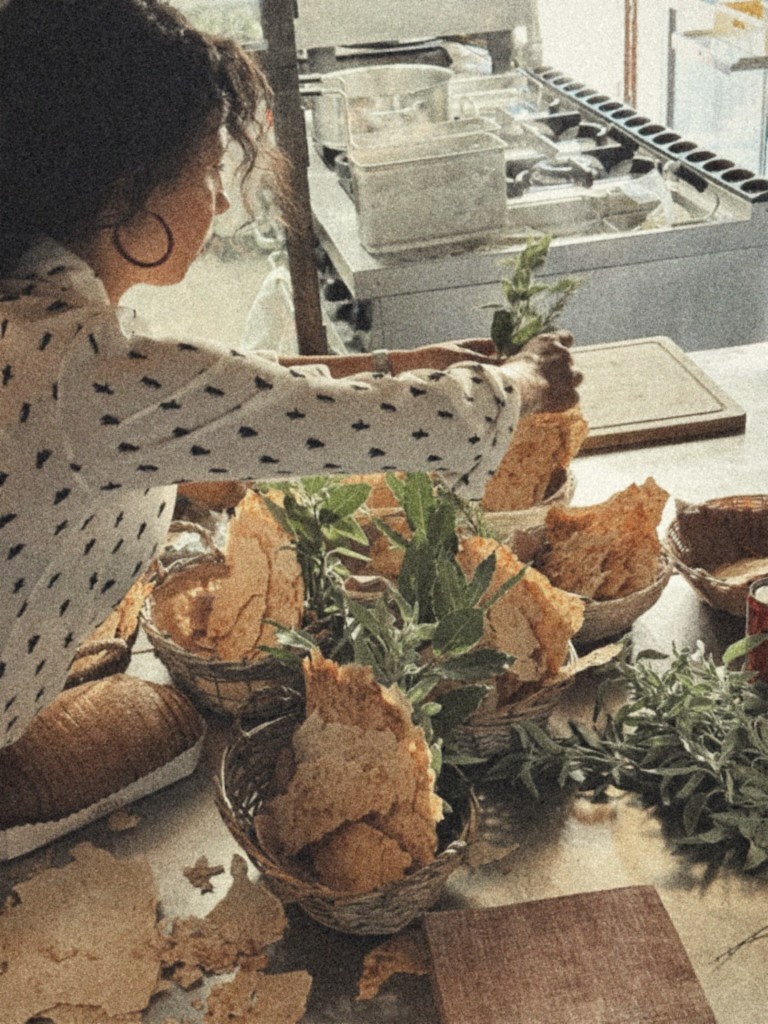
Use more than you think you should.
In Tuscany the new oil goes first onto fettunta: saltless bread, toasted over the fire, rubbed with garlic and soaked until it gives. After that, onto everything. A ladle of ribollita. Warm cannellini with sage. A steak just off the embers. An egg fried in it, with truffle from the woods shaved over the top.
It is at its greenest and most peppery in these first months, so there is no reason to wait.